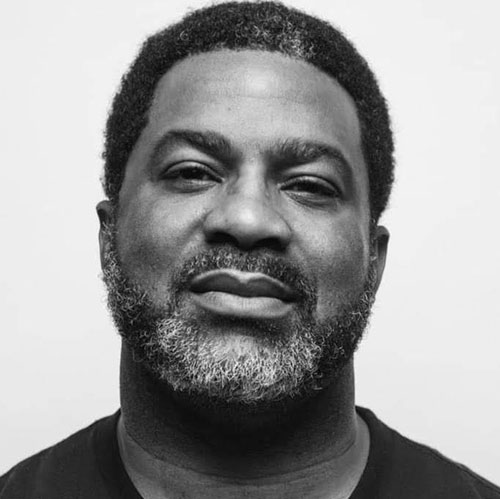
Nikole Hannah-Jones wrote a sentence on Sunday that belongs on the wall of every school that serves Black children. Ten years ago she put her kindergartner on the cover of the New York Times Magazine in “Choosing a School for My Daughter in a Segregated City,” arguing that families like hers should choose the segregated Black school down the block.
Plenty of us who run and teach in those schools sparred with colleagues over that essay for months. On Sunday she published the sequel, “In Fighting for Every Black Child, Did I Betray My Own?” Her daughter, Najya, now sixteen, thinks she chose wrong. Nikole, reading back through years of emails to principals and teachers, has come to think so too. In the middle of that reckoning she writes:
“When it comes to the education of Black children in this country, there is nearly always going to be a struggle. It’s just a matter of which one.”
I agree with every word of that sentence. Where many may part with our sister is on which struggle to choose.
Nikole is our sister. She has spent years absorbing attacks from the President of the United States on down for telling the truth about this country, and nobody who fights for Black children deserves that. Our objective is the same as hers: Black children, educated superbly. What follows is a disagreement about tactics between people on the same side, said in public because the essay is public, and said with love. Anyone hoping to lift a line from this to use against her should close the tab now.
What happened to Najya
Nikole is an honest reporter, and everything that she described as having gone wrong is similar to what far too many of the 8 million plus Black students endure.
At P.S. 307 in Brooklyn, a fourth-grade teacher sent home a folder of ungraded math, most of it wrong, while a child who loved the subject believed she was acing it. The same teacher had most likely never given the school’s mandatory reading assessment, to Najya or anyone in the class, and had assumed the children couldn’t read. A third-grade teacher missed so many days that students were parked in a kindergarten room to work alone. Lunch aides watched children hit each other and were apparently unmoved by it. The principal took days to answer an email and weeks to act, and this was for a mother who covered school inequality for the New York Times and a father who sat on the school leadership team.
At Unison, the middle school, the adults cared and it still went wrong. Teachers assigned no homework. An honors student earned A’s in eighth-grade algebra and then failed the state exam, and a tutor later found gaps back to long division and fractions. The school graded on growth rather than mastery, because so many children arrived behind. Najya was taught algebra each year by a novice, which Nikole calls a common circumstance at high-poverty schools.
None of it was caused by the race of the children in the room, though the system’s response to their race is predictable and oppressive: segregation concentrates Black children in high-poverty schools with fewer resources, and that concentration, not the children, is what the research ties to the gaps. Each item is a decision, an assumption, or an absence on the part of an adult(s).
Nikole says so herself, in a sentence she doesn’t follow to its end: the experience “exposed the fallacy that caring families are more important than competent teachers.” And again: “Students respond to the high or low expectations of institutions and the grown-ups who operate them.”
Skill, will, and mindset. Segregation set the conditions, and the conditions are unjust. But inside every one of those buildings, the deciding variable was the grown-ups.
“Will you honor my academic self?”
The most important educator in the essay is Emily Paige, the Unison principal, and she deserves credit for saying it on the record. Unison had stopped assigning homework because, as the essay puts it, studies show it doesn’t move achievement much and it sets up children who are behind to fail alone. Najya and her friends had another view. “We did. We honestly did want to get more things,” she says on a recording her mother played for Paige. “We knew that we weren’t learning enough.”
Paige heard it and wept. Then she named it: “In not giving homework, we didn’t honor their academic selves.” And: “It is important to not, in our pursuit of being anti-racist, lower expectations. Because this is what happens, right? It’s racism under the guise of antiracism.”
Across three schools in West Philadelphia, our teams were aligned on the things that mattered most: high expectations for ourselves and for our students, continuous improvement, and outcomes, and not only the state test. Homework was one of many things that came out of that alignment. We assigned it. Not because the research settles the matter; it doesn’t, though the most cited synthesis found homework’s effect is real and grows through the middle and high school years. We assigned it because of what it says. Homework tells a child that we expect her to carry the work when no adult is standing over her. It builds the habits of independent study that Najya discovered she didn’t have when ninth grade arrived and the first semester “felt like drowning.” And it is the family’s window into the classroom. Nikole only learned what was happening in fourth grade when a folder of work finally came home. Children whose work never leaves the building have families who cannot help, no matter how much they want to.
Paige has since reinstated homework. The essay calls that a mere patch that can’t touch systemic inequality. We’d say it is the kind of adult decision the whole story is made of.
Expectations run in three directions
Expectations are not a poster. In a school that works, they are a covenant among three parties, and the essay shows what happens when adults let all three sides go slack.
Expectations of staff. Nobody expected that fourth-grade teacher to grade the work, give the assessment, or show up. Nobody expected a master teacher in front of eighth graders taking algebra with fourth-grade gaps. A principal who takes weeks to respond has set the ceiling for everyone under her.
Expectations of students. Growth over mastery, a curve, no homework, a passing grade in a subject the child could not do. Najya named the wound before the adults did: “What about us?” Children know when the bar is being lowered for them, and they read it as a verdict on who they are. Our schools honored growth too, and celebrated it, because most of our children arrived behind and a child who gains two years in one deserves to hear it. But mastery stayed the bar. Growth told us where a child was and where our instruction and academic supports were falling short. It was never a substitute for getting her there.
Expectations of families. The school expected Nikole and Faraji to write checks and clear GoFundMe lists, and expected nothing else of them, not even a reply. Nikole writes about how dismissive school officials are to lower-income parents and how deferential to wealthy ones, and then finds that even her status couldn’t buy a graded folder. Low expectations of families and low expectations of children are the same disease. The mothers and fathers who filled Shaw’s auditorium were not donors. They were partners who had been expected to show up, and who did.
Integration was never the goal
On the essay’s conclusion, we part ways, and we do it standing on our elders.
In 1935, W.E.B. Du Bois asked whether the Negro needed separate schools and answered that the Negro “needs neither segregated schools nor mixed schools. What he needs is Education.” In the same essay he wrote that a mixed school with unsympathetic teachers and hostile public opinion is bad, and a separate school with ignorant teachers, poor equipment, and wretched buildings is equally bad. Both halves of that sentence are about adults.
Twenty-nine years later, in the same city Nikole is writing about, Malcolm X told a room at the Militant Labor Forum: “We are not fighting for integration, nor are we fighting for separation. We are fighting for recognition as human beings.” Two months before he said it, on February 3, 1964, 464,361 New York City children stayed home from school in a one-day boycott of segregated, second-rate schooling, the biggest demonstration against school segregation of the era, in Brooklyn and Harlem rather than Birmingham.
And in December 1963, a young SNCC organizer named Charlie Cobb proposed Freedom Schools because Mississippi’s classrooms were “geared to squash intellectual curiosity, and different thinking.” Cobb’s answer was not to move Black children next to white ones. It was to give them a summer of real intellectual work and send them back to their own schools to demand it there. Freedom Schools Literacy Academy stands in that tradition today.
None of these men were on the integration side or the separation side. They were on the education side. So are we. Najya’s Black schools gave her something her mother acknowledges and the essay undervalues: a self so sturdy that when white classmates called her “ghetto” she could answer them, and a clear eye that saw the privileged kids “weren’t smarter or even necessarily better behaved than the kids she had gone to school with before; they just had more.” The problem was never who sat next to her. It was what the adults expected of her.
Integration, as this country practiced it, also had a cost the essay doesn’t count. In the two decades after Brown, more than 38,000 Black teachers in the South and border states lost their jobs. The country kept the buildings and dismissed the adults who had built schools where Black children were expected to reach their highest potential on a fraction of the money. Nikole’s own essay shows the cost in miniature. P.S. 307 was a vibrant place under a principal who grew up in the Farragut houses across the street, and it came apart the year she retired.
Nikole’s own path makes us wonder. In 2021, after Chapel Hill’s trustees held up her tenure until weeks of protest and the threat of a lawsuit forced a vote, she turned the offer down and took her chair to Howard. She gave her reasons on national television: “I spent my entire life proving that I belonged in elite white spaces that were not built for Black people. I decided I didn’t want to do that anymore.”
Howard has far less money than Chapel Hill. She went anyway, and we love her for it. A Black institution can be the right home for a person with every other option open to her. Our children should be able to make that choice at five, in the school down the block, and have it be a good one.
What we saw in West Philadelphia
Turner Middle School, Shaw Middle School and Mastery Shoemaker, the three neighborhood schools where we taught and led, were choose-your-neighborhood schools: no screens, no test, every child in the catchment who walked through the door, nearly all of them Black and most of them poor. On paper, the schools Nikole says sit on the wrong side of the divide. All three were under-resourced, and two were turnarounds. In each one we looked for a certain kind of adult to teach and lead classrooms: people who believed their own effort would move a child, people who saw their classroom as part of the fight for justice and understood that racial justice and educational justice are one fight, and people who had mastered their content.
At Shaw, from 2003 to 2008, school-level proficiency went from growing less than a point a year to growing nearly eight, and by 2008 the school met all seventeen of its federal targets. When it became clear the district intended to take the school back from the outside manager the community had grown to trust, hundreds of parents packed the auditorium to say they wanted to keep what they had built. They were told no. That is not a story about Black families lacking agency. It is a story about Black families exercising it and being overruled.
At Shoemaker, in 2013-14, the first year Philadelphia rated every district and charter school on one citywide School Progress Report, a neighborhood school in West Philadelphia landed third among all middle schools and eighth among all high schools, on the same list as Masterman and Central.
We are not claiming that Black schools are fine as they are, or that two schools settle an argument. We are claiming what those years taught us: with stable leadership, teachers hired for will and developed for skill, homework and graded work and honest assessment, and families treated as the experts on their own children, a school full of Black children from poor blocks can be one of the best in the city. Nobody had to leave the neighborhood for it to happen.
Those three buildings should be kept separate from the typical school serving Black children, because the data on the typical school is as bad as Nikole says. Districts that mostly serve children of color get $23 billion less a year in state and local money than districts that mostly serve white children, for the same number of students. In the schools with the most Black students, 15 percent of teachers are in their first or second year, against 10 percent in the schools with the fewest. Nationally, 14 percent of Black eighth graders read at or above proficient.
When a district decides to close buildings, Black children are the ones moved: in Philadelphia’s 2013 round, 79 percent of the students in schools slated to close or relocate were Black, in a district that was 55 percent Black. Every one of those numbers is a decision adults made, most of them nowhere near the building, about what a Black school would get. Turner, Shaw and Shoemaker sat inside all of those numbers, with the same children and the same zip codes as everywhere else in that data. The adults in the building were different, and so was what they demanded of themselves.
Most of the children in those buildings did not have Nikole’s safety net. Across two decades and thousands of students, very few of ours had a parent who could hire a tutor, get a principal on the phone, or move them to a screened school when a year went wrong. Najya will most likely be fine. Even so, the net is thinner than it looks. For this generation as a whole, the odds of out-earning your parents have fallen from about 90 percent for children born in 1940 to a coin flip for children born in the 1980s.
For Black boys, who were half the children in our buildings, it is worse: Black boys raised in wealthy households are more likely to become poor than to stay wealthy as adults. For most of our students, school was an important part of the net, and for their parents too. Our teams worked from two facts. By our count, children spent roughly a fifth of their waking hours with us, and inside that fifth a teacher could move a child’s whole trajectory: in Tennessee’s data, students who drew the least effective teachers three years running scored some 50 percentile points below similar children who drew the most effective.
Every one of us had watched what two weak teachers back to back did to a child. So we treated the fifth we had as the most consequential fifth of that child’s day. Not with our hair on fire. With the understanding that our students required of us what our ancestors fought for, and that we would answer for it to their descendants.
The highest expectations for our young people
There is a ladder here, and every adult who works with Black children stands on one of its rungs.
The bottom rung says: you can’t, so we won’t ask. No homework, ungraded work, a curve, a reading assessment nobody bothered to give.
The middle rung says: you can, so go get yours and get out. Test into the screened school, leave the block, don’t look back. Most of the “good” schools in Nikole’s story stand on this rung, and so does the integration argument itself. Get the Black child to where the resources are.
The top rung says: you can, and we need you. You are our replacements. We are developing you to change the world, and the world starts on this block. That is what Freedom Schools said in 1964, and what our elders said to us coming up in Philadelphia. It is the only rung that carries the highest expectations, because it assumes the child is capable, necessary, and accountable to somebody. A school that tells a child to escape has also told her, quietly, that the people she is leaving behind are not worth saving.
I’m not sure if Najya was ever told she was our replacement. She seems to have been told to sacrifice for children she’d never meet, and then to compete with children who “just had more.” No wonder she is angry. She was handed the bottom rung and the middle rung and never shown the top one.
No child should be left to languish
Within hours of the essay, the Times’ own morning newsletter had retold it as the story of an editor who kept his son in an ordinary D.C. public school until fourth grade, moved to the suburbs, and felt he had compromised his principles. In that version the moral is simple: leave sooner. Nikole says the opposite in her last paragraph. There is no absolution for rescuing our own children from schools where we let other people’s children languish.
That remix is what the people who attack her want from this essay. Poor Black kids are the problem, integration failed, flee. We will not hand it to them. Nikole’s honesty is evidence against the adults who failed one child and the system that made failing her so easy, not against Black children.
Which struggle
So, which struggle to we dedicate ourselves to? Not the one for a seat next to a white child. Du Bois told us that, Malcolm told us that, and Najya, who has now sat in that seat, tells us that too. The struggle worth our lives, and worry of our collective best efforts, is the one for adults: principals who answer emails in a reasonable timeframe, teachers who grade the work and give the assessment and assign the homework, superintendents who put master teachers in front of the children furthest behind, families treated as partners, and children told, from pre-K, that they are our replacements, and not lied to.
Najya told her mother, at the end of a hard phone call, “I am kind of happy that you are seeing this.” So are we. Not because anyone was wrong and anyone was right, but because the woman who moved thousands of families ten years ago can move them again, this time toward the schools our children are already in and the adults who run them.
She already knows what that can look like. In 2021 she and a Waterloo teacher, Sheritta Stokes, opened the 1619 Freedom School in her hometown: a free after-school literacy program for fourth and fifth graders reading below grade level, taught by a mostly Black staff of licensed teachers through Black history, built for the Black children furthest behind. In its first semester, the number of children reading on grade level went from 14 of 37, to 21. Nobody in that room was waiting on a white classmate.
The adults expected the children to read, taught them, and they read. A room full of Black children from three to five in the afternoon is not a different kind of room than the one from eight to three. The struggle she is already winning in Waterloo is the one we are wondering if more families would choose in Brooklyn.
Again, that sentence that stuck out to me: “When it comes to the education of Black children in this country, there is nearly always going to be a struggle. It’s just a matter of which one,” is the one that summed it all up for me, my parents, my grandparents, and millions of others, including a Black mom’s post on Threads:
Stay, and your child may be underserved. Leave for a whiter or more selective school, and your child carries the otherness and the racism. Or find the rare school that manages both, “which is more exception than option.” She ended where too many of our families end: “Black parents are left deciding which cost we are willing to ask our children to bear.”
However, there is a fourth option, and it is the one this whole piece has been about: the school down the block, made excellent by the adults in and around it. It is rare because we have let it be rare.
That fourth option will be the subject of Part 2. Stay tuned.
Onwards.