In my AP African American Studies classroom, my students brought what some scholars refer to as the inner curriculum: a first person perspective focusing on the mind, body, emotions and embodied perception as a counterbalance to traditional subject matter. After the summer reading assignment of The Souls of Black Folk by W.E.B. Du Bois, students analyzed how Du Bois envisioned what it must’ve been like to live in the contrasting worlds of Harvard University and the Black community to which he belonged. He described this awareness as a “twoness” or “double-consciousness.”
One student answered the book’s thematic question: “How does it feel to be a problem?”
“Being ‘the problem’ is a direct hit to your internal mind and character, convincing you to feel like you need to change or get out of the way in order to fix the world around you.”
This student’s words inspired me to think even further. Why was the existence of an AP African American Studies course ever a problem to some? How do we make it not a problem for all students to learn about our entire history?
If you think about our traditional history courses, they usually center on a specific Eurocentric narrative. A whitewashed perspective of how our history played out in a glorified linear storyline. Students who decide they want more than that are catching up on Black history inside of one school year when they take AP African American Studies. They learn about missing narratives, historical erasure, and the under-taught history of their own communities.
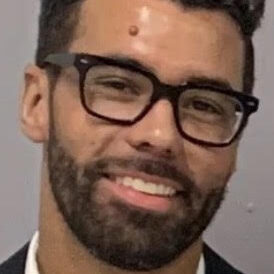
As a Black male educator, in a country where we only account for 2% of all teachers, I deeply understand navigating double-consciousness. As Du Bois explained it, “I have called my tiny community a world, and so its isolation made it;” describing our small corner of a classroom. A place where we master rigorous college-level work with the goal of achieving a clearer understanding of the truth about our history.
As both students and teachers, we open up every school year in AP African American Studies knowing that we will be focusing on content that the majority of the building doesn’t know. That much of the country doesn’t know, and honestly, most of the world doesn’t know. They may never know it, but the students who have chosen this course will know and what they decide to do with that newfound knowledge is totally dependent on their own agency.
The Power of Convergence for Black Educators
During my training for the AP African American Studies course at Howard University, I absorbed the energy of the passionate creators of the framework. Antoinette Waters was my trainer. I knew immediately, it was imperative that I take that same passion I saw in her and more back to my classroom. Sharing these stories and introducing my students to specific people who wrote, taught, and directed this curriculum further displays its importance. Just as those who established the first African American history course in the U.S. at Merritt College in Oakland, California in 1964 led to the formal African American Studies department at San Francisco State College in 1968.
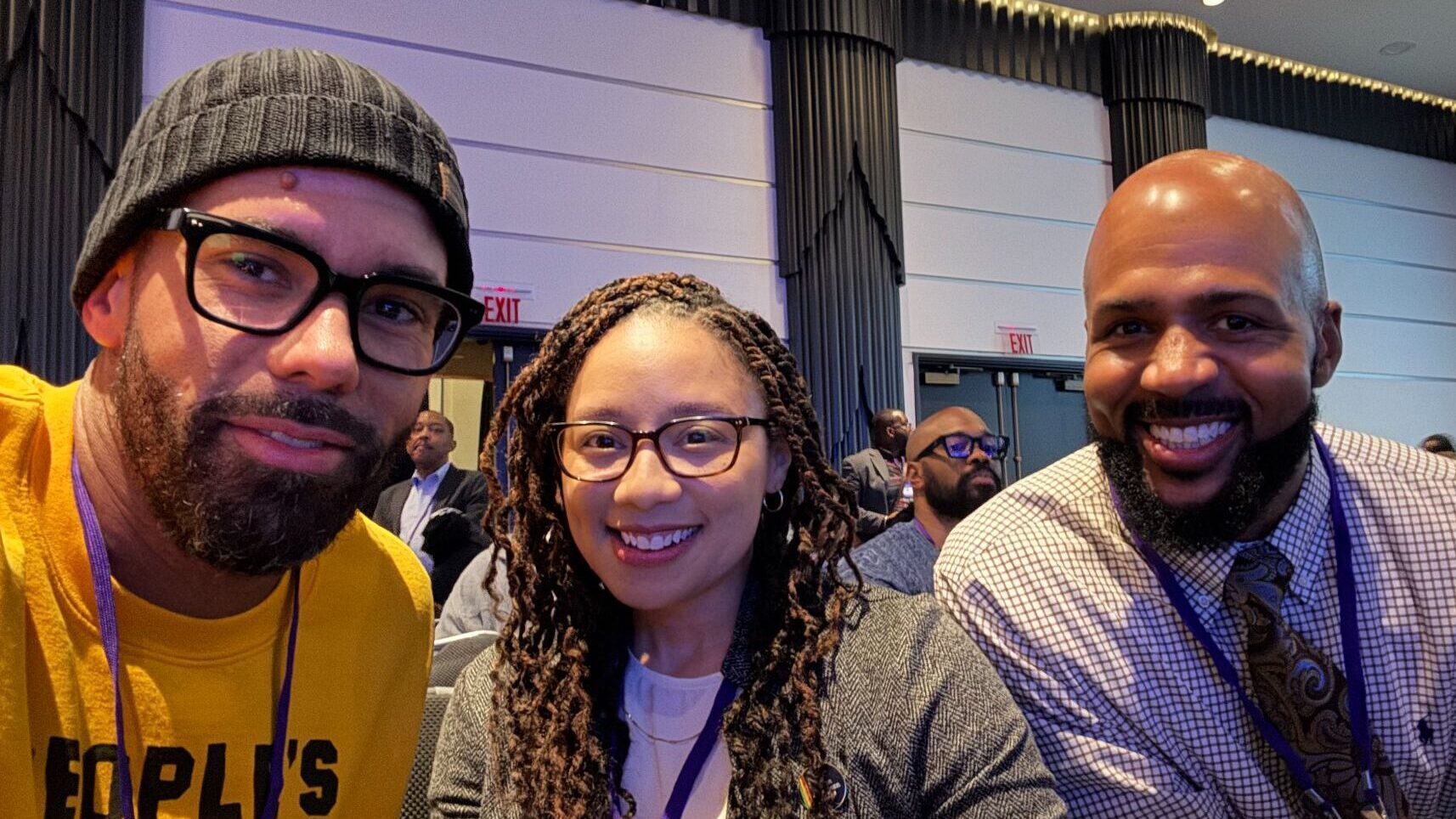
When I attended the Black Men in Education Convening (BMEC) in Philadelphia, Pennsylvania, hosted by Sharif El-Mekki, I met Brandi Waters, Senior Director at the College Board, I caught up with my friend Leon Smith, Pennsylvania National Teacher of the Year, (also an AP African American Studies teacher) and took a picture with both of them. Because my students need to see where I was at, who I’m around, and why this work is important. We’re talking about a course that’s still only a few years old.
The Aura of Our History
When I shared with my class, my students appreciated the aura, a term that already existed but has been reinvented by young people-their way of describing a sense of belonging in the classroom. In the back of the classroom, Nyah sat right next to Bailey. Directly behind these two Black female scholars were photos on the wall of a young Stokley Carmichael marching with Dr. Martin Luther King Jr., Huey P. Newton and Bobby Seale, Malcolm X, Muhammad Ali, Gordon Parks, and the iconic picture of a little Black boy choosing a white doll during the Clark Doll test. The posters, artwork, books, action figures, flags, Black history t-shirts, a hoodie with Angela Davis, in my classroom represent references in my lectures. This isn’t just decoration; it’s an extension of the curriculum. The Black action figures displayed in my classroom combat with that same picture where white seemed better than Black.
The Afrofuturism in Black Panther, Lando Calrissian, and Nichelle Nichols highlight what could be and reverse the false narratives of the African diaspora. At first, I assumed that the smiles, giggles, and sidebar conversations between Bailey and Nyah were cliche signs of disinterest. I was completely wrong. Because my cold call approach was verbally met with those students expressing how much their minds were grasping the newfound knowledge that was kept from them.
I thought the same of Alijah, Taj, and Noah until their voices were heard. Niashey never said a word to me but her work let me know that she appreciated the content. Cai was quiet but their creative ability was the assessment during the Individual Student Project (ISP): a painting paying homage to the Black Panther Party for Self-Defense. Ace enjoyed my style of teaching as they shared with me that they wanted to teach as well. Jonathan and Daphnie appreciated learning more about the true Dominican Republic and Haitian history.
Capturing these moments are vital because through their K-12 experiences they were more than likely deprived of these aspects of history that are too often overlooked, misunderstood, and frighteningly forgotten.
As an educator, meeting a students’ inner contributions with examples of the hidden curriculum has become an expectation of mine. The very first time I read The Souls of Black Folk was in college. I could’ve used Du Bois’ perspectives and an AP African American Studies course in high school.
Becoming the teacher I needed in high school continues to be my goal.