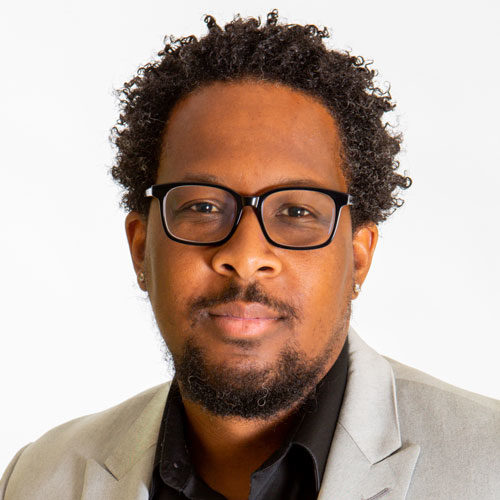
When I entered the teaching profession, I had no idea what type of teacher I would become. I wasn’t even sure if I could do the job, despite having the ability. What I was aware of was the awesome responsibility I had for teaching Black and Latino youth. With that in mind, teaching became a debt to repay.
It was a repayment to the many Black and Latino educators who poured into me, a Camden City, New Jersey kid. But teaching also became an opportunity to provide what I didn’t get enough of when I was in high school, diasporic African history, and an accurate portrayal of American history.
Many years removed from those early years of teaching, I continue to refine my teaching approach while incorporating the qualities of a counselor, mentor, and even parental influence for those who require. My classroom feels more like a living room than a classroom, with a couch, carpet, and pictures of the students all over the wall, because over the years, they’ve become family.
Of course, there’s the work of lesson planning, grading, scaffolding and pacing, contacting parents, and creating assignments. However, it’s the relationships that draw students to my orbit and inspire them to return as alumni after graduation that make teaching much more than just the paperwork and deadlines. With a government that is actively snatching Blacks and Latinos off the streets while simultaneously rejecting their history on such a wide scale that teaching it is viewed as treasonous, this work is vital.
When I look at what I do each day in the classroom, I see the passion, the purpose, and the people; my morale couldn’t be any higher. I walk in the tradition of DuBois, Carter Woodson, Ida Wells, Leila Pendleton, and Wilhelmina Crossen. I am the progeny of a tradition rooted in Black resistance and empowerment, and now I have my own tree of Black and Latino students who have become teachers, continuing the tradition of resistance and empowerment.
But, I know the narrative.
Black teachers have one of the highest—if not the highest—rates of teacher turnover in the teaching profession. But it’s not because we don’t love the work. It’s because the district leadership doesn’t always love us, support us, properly promote us, or trust us to be the best we can be for the students who need us to be that.
However, other data indicate that when considering teacher morale, Black teachers have the highest.
According to an Education Week Survey, which polled a nationally representative sample of nearly 1,500 teachers in October, Black teachers, who make up just 6.1 percent of the workforce, tend to find their work meaningful and fulfilling, which can lead to higher morale. On a scale ranging from –100 to +100, White teachers have a morale score of –13; teachers of two or more races have a morale score of –14; and Hispanic teachers have a morale score of –6. Black teachers’ morale, meanwhile, stands at +5, suggesting they feel more positively than negatively about their jobs.
Do you want to know why teacher morale is highest amongst Black educators? The answer is found in my story and the many stories like it told by Black teachers. In a study I conducted with Rowan University professor Anna Q. Sun, we explored how teachers of color:
“… felt they had deep ties and connections with their communities and they were responsible to challenge the status quo and promote social justice through their teaching and instructions in classrooms. They were passionate to transform schools for students of color and presented ‘a relational commitment’ in their teaching…
teachers of color have experienced racism, social injustice, and ethnic oppression sometime in their lives and may better understand students of color. They are capable of providing alternative perspectives on curricula, pedagogy, and schooling and are likely to challenge the system that has oppressed marginalized communities.”
The dedication of Black teachers to Black and brown students and their families is the fuel that charges our morale because we know that our work makes a difference.
I didn’t need a study to report that Black teacher morale was the highest amongst teachers. Not because I already had the quantitative data (I had the qualitative data), but because I know that most Black teachers, if not all, share a similar sentiment about teaching. We desire to teach students who look like us—from communities where we come from—that they are more than enough in this world, and their history says so, because we have a desire to give back to the very people and communities that taught and raised us.
However, the words of Genelle Faulkner, a science teacher in Boston, ring true: “It’s a lot of pressure on yourself. It’s a lot of work, it’s a lot of energy… I think the job overall is very unsustainable, especially as a teacher of color.”
The pressure we put on ourselves, combined with our commitment to the work and the people, can lead to burnout. However, not all of us burn out; we recharge, regroup, and restore ourselves, where our schools and districts often fail to do so. We join affinity groups, such as the Philadelphia Affinity Group Network, led by Dr. Andrea Terrero Gabbadon, and attend conferences like the Black Male Educators Convening, hosted by the Center for Black Educator Development, led by Sharif El-Mekki.
We are mentored by Black educators who nurtured us as students, and we’re honored by the parents and families we serve, as we teach their children. And we’re also inspired by the havoc we’re witnessing, committed by political conservatives at all levels of government, attacking the teaching of Black history and adding more Black teachers to the profession. We see that our students need us, and despite the challenges and setbacks, we have all the motivation we need to do the work. The results we find in our students’ performance and morale strengthen our own morale.
Indeed, we are the big steppers.