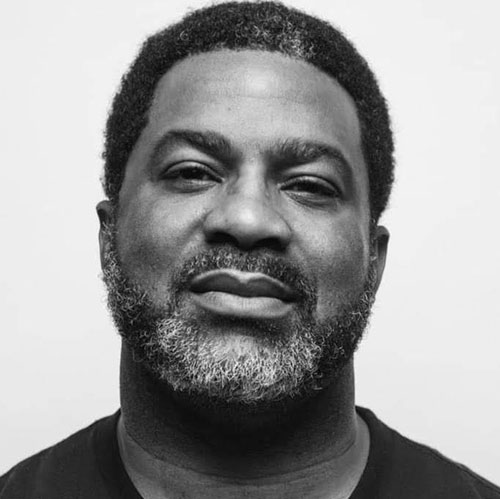
I attended Overbrook High School as the new kid, transferring from a small middle school in Qom, Iran. I went from a tight-knit “foreign” school community into a massive neighborhood high school that, at the time, held thousands of students. I left Overbrook with a full scholarship to attend Indiana University of Pennsylvania. In between, I participated in statewide science fairs, won a city track championship, watched talented classmates thrive in in-school magnet art and music programs, shared the school with soon-to-be (and alumni who already were) famous scholars, athletes, civil servants, and entertainers. I built lasting bonds with teachers, coaches, and peers who helped shape my life.
That is why this moment feels so complicated for me.
I know what a school building can hold. It can hold talent, memory, identity, pride, safety, possibility, and belonging. It can help launch a young person into a future they might not yet be able to imagine for themselves—especially a young person who already feels “new.” New to the country, new to the neighborhood, new to the school. So when we talk about school closures in Philadelphia, we are not just talking about buildings. We are talking about anchors in communities that have already endured too much loss.
I also applaud the School District of Philadelphia’s Board of Education for delaying its vote on the facilities master plan. This decision to pause, even after district officials listened to hundreds of hours of town hall testimony over time, to respond to City Council members, parents, community advocates, and students asking tough questions—this is what democracy in action can look like. It is messy, difficult, and absolutely necessary.
At the same time, it’s important to be honest: bold action is still needed. The proverbial can has been kicked down the road for far too long.
We Cannot Ignore the Conditions
Philadelphia’s public schools have lost more than 17,000 students over the last decade. Around 117,000 students now attend district and alternative schools, a 13 percent drop from ten years ago, and state projections suggest enrollment will decline by another roughly 10,000 students by 2034–35. Birth rates have declined, cyber charter enrollment has exploded, and the district is being asked to maintain far more space than the current student population can support.
At the same time, the physical condition of many school buildings is unacceptable. The total cost of needed repairs and upgrades has grown to $8 billion, including $4.5 billion in deferred maintenance. Philadelphia school buildings on average are more than 70 years old, and some are more than a century old. Students and staff have had to learn and work in buildings affected by asbestos, lead, and long-neglected structural issues.
I know this tension personally. I’d be saddened if Overbrook were to close (it is on the list to co-locate with the Workshop School). My attachment is not abstract. It is emotional. It is rooted in who I became there—as a teenager who arrived from another country and found a way to belong in those crowded hallways and in the Scholars Program. But I also know the building has deep structural needs. Years ago, millions were spent on repairs, including roofing work, and a district facilities manager told me those repairs were basically a bandage on a much larger problem. That kind of truth is hard to hear. It is also necessary.
Black and Brown Communities Carry the Heaviest Weight
This conversation cannot happen without naming the racial reality beneath it. Fifteen of the 20 schools initially proposed for closure were majority-Black, and Black students were 1.6 times more likely to be in closing schools. Philadelphia’s school segregation also remains “stubbornly high,” roughly where it was three decades ago. Segregated schools are more likely to face resource inequities, teacher shortages, and reduced access to advanced coursework.
Families in Black and Brown neighborhoods are not imagining the pattern when they say they have seen this before. They have. Too often, communities are first disinvested in, then destabilized, then told that the loss they are experiencing is the unavoidable price of reform. That history matters here. It should shape not only how decisions are made, but who gets to shape them.
This is why voice matters so much. In communities where agency has too often been undermined, being able to speak with clarity, power, and consequence about neighborhood schools is not a side issue. It is central. And that same equity lens has to stay with us as we think not only about students and buildings, but also about the educators who make schools feel like places of possibility.
We Must Also Watch What Happens to Black Teachers
As we think about equity, we cannot only look at where Black and Brown students land. We also have to pay close attention to what happens to Black teachers and school staff when buildings close, merge, or are repurposed.
History gives us a painful warning. After Brown v. Board of Education, tens of thousands of Black teachers and principals lost their jobs as Black schools were closed or consolidated. In the two decades following Brown, some 38,000 Southern Black teachers lost their jobs, and broader historical analyses estimate that as many as 100,000 Black educators were fired, demoted, or pushed out between the early 1950s and late 1970s. That history is not identical to Philadelphia’s current moment, but it is a warning that structural change in education can carry deep racial consequences for the educator workforce if equity is treated as an afterthought.
That matters even more because Black teachers are not interchangeable with a generic notion of staffing. Research shows that Black students who have one Black teacher by third grade are 7% more likely to graduate high school and 13% more likely to enroll in college. More recent work also finds that teacher diversity benefits students broadly, including through lower suspension rates and stronger outcomes even when students are not directly assigned to a same-race teacher.
There is another layer here too. How students of color experience school shapes whether they can even imagine themselves becoming teachers one day. Reporting on a co-report by Teach Plus and the Center for Black Educator Development, Seeing Myself: Students of Color on the Pros and Cons of Becoming Teachers found that high school students of color were more likely to consider teaching when they saw teachers who shared their identities and when they believed they would be valued, respected, and protected in school environments. The report gathered perspectives from 103 high school students of color and Indigenous students across 18 states.
Teach Plus and CBED have also emphasized that culturally affirming school conditions and diverse, respected educator teams are essential to sustaining Black teachers and building a stronger future pipeline and that school leaders should intentionally build cultures where Black educators can survive and thrive. When school closures and facility decisions erode those conditions, we are not only impacting students’ present; we are shrinking the future pipeline of Black educators they might one day become.
So as Philadelphia debates which buildings to fix, merge, repurpose, or close, another question has to stay on the table: what will this mean for Black teachers and other teachers of color in our city? If we say we care about equity, then we should be humble enough and honest enough to carefully track the impact on Black students, Black teachers, and Black communities alike—and thoughtful enough to build guardrails that mitigate harm before it happens.
What Still Haunts Many of Us
Part of what makes this conversation so painful is that Philadelphia has lived through school closures before, and too many children were not better off because of them. Some students did not just experience one closure. They experienced instability over and over again. A student might have been moved from one school to another, only to see that second school close too. That is not just disruptive. It is educational harm.
Research on Philadelphia’s 2012–2013 closures found that displaced students’ absences increased significantly, and students who had to travel farther to new schools missed more days and faced more suspensions. When receiving schools enrolled a high concentration of displaced students, academic outcomes declined for both displaced students and the students already there. Other research has found that school closures can reduce high school graduation and four-year college enrollment.
There is also the human cost that data alone cannot fully capture. Scholars have documented that closures disrupt social ties, weaken belonging, decrease parental involvement, and can push strong educators out. Many of us do not need research to tell us that; we saw it. We lived it. But the research confirms what families have been saying for years.
That is why one principle has to be non-negotiable: if a child is moved out of a neglected building, that child must be guaranteed a clearly better educational experience. Not a comparable one. Not a promised one. A demonstrably better one—especially for students who already carry the weight of being new, different, or unseen. And as we measure whether a transition is truly better, we should be asking whether it is protecting the relationships, cultural knowledge, and educator diversity that students also need in order to thrive.
We Can Do Hard Things
The lesson from national research is not that all consolidation is harmful. The lesson is that careless consolidation is harmful, and thoughtful, well-supported transitions can produce better outcomes. In New York City, school closures led many students to enroll in stronger schools, and graduation rates rose by 15 percentage points for affected students. Research summarized by Chalkbeat also found that students displaced from low-performing schools can benefit when they land in higher-quality schools.
That distinction matters. The question is not simply whether a building closes. The question is where students go, what they gain, what they lose, and whether the district is willing to invest enough to make transition real rather than rhetorical.
Recent guidance on minimizing harm points to a few essential commitments. Districts need time for stabilization, strong transition planning, better destination schools, and sustained accountability over multiple years. They also need transparent criteria, meaningful family engagement, and a process communities experience as legitimate.
In plain terms, agile action does not mean rushed action. Nimble thinking does not mean reckless decision-making. It means being honest about the scale of the challenge while being creative enough to avoid repeating the most damaging mistakes.
We Need More Imagination, Not Less
One of the most powerful examples of creative reuse I have seen is in Memphis. I visited a school there several times inside what is now Crosstown Concourse, the former Sears warehouse and distribution center that had sat vacant for more than two decades after closing in 1993. The building, originally constructed in 1927, spans about 1.5 million square feet and easily could have remained an eyesore for generations.
Instead, it became a hub of thriving activity, learning, and community life. Crosstown Concourse was redeveloped into a mixed-use “vertical urban village” that includes Crosstown High School, healthcare facilities, a YMCA, retail, restaurants, apartments, community organizations, and a flexible 417-seat theater. The theater itself serves arts, music, and film programming for Memphis organizations.
That example stays with me because it reflects the kind of policy imagination this moment demands. A massive vacant structure was not treated as a symbol of decline. It was treated as a community asset waiting for a serious vision. Philadelphia needs more of that mindset. Not every struggling school should close. Not every aging building can be saved as-is. But too often our debates get trapped between false binaries: save everything exactly as it is, or shut it down and move on. There is more room than that for creative, community-centered problem solving.
That could look like co-locations that actually make sense. It could look like mergers with clear academic and cultural plans. It could look like converting underused spaces into early childhood hubs, workforce development centers, arts campuses, health partnerships, or mixed-use sites that keep public purpose at the center. State and district guidance on school closure alternatives includes reorganizing grade spans, changing attendance boundaries, converting sites to specialized programs, and developing joint-use agreements with community partners.
Ideas I Keep Coming Back To
I am far away from these decisions. I am not sitting on the school board, hosting community meetings, reporting on the progress, or running the facilities department. But like many community members—current students, alumni, families, educators, neighbors—I carry lived experiences, dreams, and aspirations that are directly tied to our schools. I do not have all the answers, but as I listen and learn alongside others, a few ideas keep coming back to me.
- When a school closes, students should move only to schools with stronger academic performance, stronger climate indicators, and clear long-term investment plans.
- Receiving schools should get additional counselors, climate staff, academic supports, enrichment opportunities, and transition funding before new students arrive—not after problems emerge.
- Families should get clear information early, including academic comparisons, transportation impacts, safety considerations, and what specific supports their children will receive during and after the transition.
- The district could publish public benchmarks for success and report on them regularly for multiple years, so communities can see whether promises are being kept.
- As these decisions are made and implemented, we should carefully track the impact not only on students, but also on Black teachers and other teachers of color—paying attention to who is being displaced, who is being supported to stay, and whether the changes are strengthening or weakening the presence of Black educators in our schools. That matters for students’ day-to-day experience and for whether high school students of color can see teaching as a future career for themselves, something raised in a co-report by Teach Plus and CBED.
- No child should be subjected to serial displacement—moved from one closing school to another that is at risk of closing again soon.
- Communities should be engaged not only before votes, but throughout implementation and long after the media moves on.
These are not demands from an expert. They are questions and hopes from someone who loves this city and its children, and who believes we can make different choices than we did in the past. I realize there are people who are thinking about, planning and implementing these and more, and I encourage us all to continue to do so, full throttle.
What Long-Term Thinking Might Look Like
Philadelphia (not just the District) also needs a 10- to 20-year (at least!) vision that is honest about demographic change, public funding constraints, birth trends, mobility patterns, and the future needs of students. The district’s revised facilities plan now calls for a $3 billion investment, 17 school closures, 169 modernized schools, and the continuation of six co-locations. That scale of investment should force a deeper question: what kind of district is our city actually trying to build for the next generation?
That future has to include flexibility. Enrollment patterns will keep shifting. Student needs will keep changing. Buildings must be safer, healthier, and more adaptable. But long-term thinking cannot become an excuse for distancing decision-making from the people who live with the consequences. The most effective systems plan ahead and stay accountable at the same time.
In schools, just as in organizations, transitions affect culture. As a teacher, every time a student entered or exited a classroom, the shift mattered. New students needed to feel embraced. Loss had to be acknowledged. Community had to be rebuilt on purpose. School transitions work the same way, only with far more at stake. For students who, like I once did, are already learning a new country, a new city, and a new culture, that sense of being seen and held through transitions becomes even more critical. The systems surrounding schools—including transportation, mental health, after-school supports, neighborhood safety, and family communication—have to be part of the calculus too.
What I Believe This Moment Requires
For me, this is not a call to simply close schools, and it is not a call to refuse every closure on principle. It is a call for our city to continue deep thought and dialogue, sharp analysis and rigorous planning, strong public reporting structures and accountability, and optimal levels of effective creativity than this city has at times brought to some tectonic shifting decisions in the past.
Doing nothing is not a responsible option. But neither is doing something harmful and calling it bold.
Philadelphia needs courage, but it also needs care. It needs nimble thinking rooted in community trust. It needs agile action that is not detached from history. It needs leaders willing to tell the truth about declining enrollment and crumbling infrastructure, and equally willing to tell the truth about racial inequity, community grief, and the damage of poorly designed transitions.
For those of us who know what a school like Overbrook has meant in our own lives, this will never be a sterile policy debate. It should not be. Our schools have helped raise us. They have held our memories, our milestones, our teachers, our coaches, our art, our brilliance, our friendships, and our futures.
That is exactly why this conversation has to be worthy of our children. And when we say “do no harm,” that should include Black students, Black teachers, and Black communities—and it should show up not just in speeches, but in the actual guardrails, supports, and outcomes our city willingly, publicly, and effectively chooses to track.
Philly, I love you. Let’s get it right.